Building Automation for a Next-Generation EV Battery Manufacturing Campus
Knowing they needed a partner with a unique mix of process and AI expertise, the manufacturer turned to RoviSys after endorsement from a technology partner. RoviSys stood out because of its combined deep industrial process and control-systems knowledge with data science and reinforcement-learning capabilities, positioning them to both understand the glass-forming process and build the simulation and autonomous agent needed to run it.

The Challenge
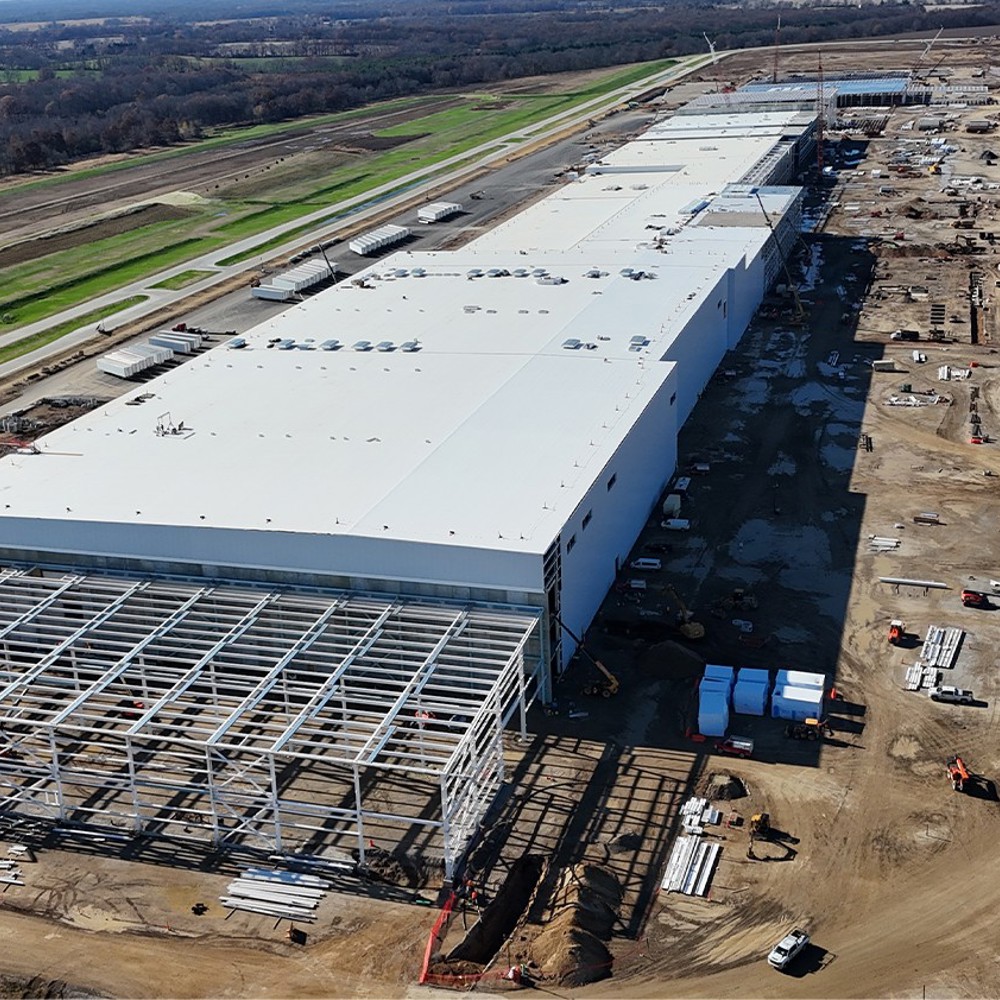
As the automotive industry accelerates toward electric vehicles, one of North America’s most ambitious EV manufacturing programs was launched to meet rising production demand. The mega effort centered on the development of a city-scale campus in Tennessee, featuring a large-scale EV battery plant, vehicle assembly plant, and central utility plant. The site spans hundreds of acres and incorporates a wide range of building systems, manufacturing processes, and utilities. Multiple mechanical and electrical vendors, diverse equipment platforms, and separate utility infrastructure created significant complexity. The project required a unified controls architecture capable of integrating numerous systems while supporting the speed and scale of construction.
Additionally, the Tennessee site required coordination between the battery manufacturing facility and a central utility infrastructure operated by a third-party utility provider. Achieving reliable integration across building systems, utilities, and vendor technologies was critical to ensuring the plant could operate efficiently from day one.

Our Role
RoviSys Building Technologies partnered with general contractor Walbridge to deliver the building automation and integration systems for the Tennessee battery manufacturing facility.
The engagement began with extensive pre-construction design assist, where RoviSys engineers worked alongside the project’s mechanical and electrical design teams to ensure systems could be properly sequenced and integrated. These early efforts helped establish a clear controls architecture that could be replicated across all three facilities.
To support the Tennessee project locally, RoviSys established a dedicated on-site project leadership team and built a regional workforce of engineers and project managers. At peak construction, the project team included more than twenty professionals supported by experienced RoviSys resources.
As part of the overall scope, RoviSys worked closely with OEM partners delivering critical process equipment, including dehumidification systems and custom air handling units. In these areas, RoviSys provided controls design, integration, commissioning support, and training, helping ensure that both facility systems and manufacturing environments met the strict performance requirements required for lithium battery production.
RoviSys engineers developed unique strategies to deliver a project of this scale, designing an interface that unified building automation and electrical power monitoring into a single Niagara 4 front end. The platform provided visualization and monitoring tools.

The Solution
RoviSys implemented a unified building automation platform using the Tridium Niagara framework, aligning with the client’s existing standards while enabling seamless integration across multiple vendors and subsystems.
The system incorporated controllers from Distech Controls and integrated equipment from a variety of manufacturers, including HVAC and mechanical systems from Trane Technologies and Johnson Controls. More than 250 variable frequency drives and motor starters were incorporated into the controls environment.
RoviSys engineers developed unique strategies to deliver a project of this scale, designing an interface that unified building automation and electrical power monitoring into a single Niagara 4 front end. This platform provided visualization and monitoring tools, including:
- Battleship-style floor layouts with gridlines that map precisely to the plant’s physical layout
- Top-down facility views for equipment monitoring and navigation
- Cross-section airflow diagrams illustrating airflow paths
- Integrated electrical power monitoring via the Niagara 4 interface
In addition to core building systems, RoviSys delivered specialized OEM-integrated solutions critical to battery manufacturing operations. RoviSys partnered with a leading dehumidification unit (DHU) manufacturer to deliver and commission more than 45 units designed to maintain strict environmental conditions required for lithium battery production, including spaces controlled to below 1% relative humidity. RoviSys developed and implemented a ground-up controls solution using Distech controllers and specialized sequences, supported several months of commissioning to validate performance, and provided training and support that helped establish Distech as a standard offering for the OEM.
RoviSys also partnered with a custom air handler manufacturer to deliver sixteen Air Supply House (ASH) coater units supporting the battery coating process. These systems required precise coordination between make-up air, exhaust, and process controls. RoviSys engineered a solution that ensured balanced airflow, reliable air tempering, and effective filtration, tightly integrated with the process to maintain critical environmental conditions.
Because the campus is large scale, utilities are supplied by a regional energy utility. RoviSys engineered the control system to interface with the central utility plant through Rockwell Automation technology, and created a secure exchange between Distech controllers and Rockwell systems. This integration allows power and water usage data to roll up to a centralized utility dashboard for the entire site.
In addition to the primary EV battery facility, RoviSys also delivered controls for several ancillary buildings across the campus, including pump houses, safety and training facilities, guard buildings, cell discharge facilities, and modular medical buildings. Each system operates independently while remaining connected to the centralized automation platform.

The Result
The project was completed successfully over a multi-year construction program that began in early 2023. RoviSys delivered a scalable, integrated controls environment that unified building automation, power monitoring, and facility operations across a highly complex manufacturing campus.
Critical process systems, including dehumidification units and Air Supply House (ASH) coater units, were successfully integrated and commissioned to meet the stringent environmental requirements of lithium battery production. RoviSys controls strategies and commissioning support ensured these systems consistently achieved tight temperature, humidity, and airflow tolerances, enabling reliable and repeatable manufacturing conditions.
The Tennessee site progressed smoothly during construction and commissioning, with the client noting that the location advanced faster and with fewer challenges than comparable projects at other locations and facilities that were part of the program.
The collaboration strengthened the relationship between RoviSys and Walbridge. The team was pleased with the work and has specifically requested members from the project team to support future initiatives. That trust is opening the door to additional opportunities, including upcoming data center development projects.
Following commissioning, RoviSys continues to support the facility through dedicated on-site service and support resources. Additional “day two” enhancements are already underway, including expanded particulate monitoring and additional temperature sensing to support quality control in critical areas of the battery production process.
The project demonstrates how early engineering collaboration, scalable architecture, and disciplined project execution can enable next-generation manufacturing facilities to come online efficiently while supporting long-term operational performance.